Commercial Waste Dalston: Recycling and Sustainability Commitment
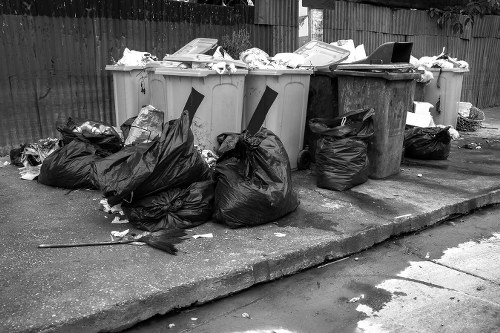 Commercial Waste Dalston is committed to creating an eco-friendly waste disposal area across Dalston and surrounding neighbourhoods. Our local approach combines practical on-the-ground services with strategic partnerships to make the sustainable rubbish area model work for businesses of all sizes. We prioritise reuse, high diversion rates from landfill, and transparent reporting so that every client can see progress toward a greener commercial waste footprint.
Our ambition is clear: we aim for a measurable recycling percentage target that drives continuous improvement. Specifically, our target is to achieve a 70% recycling and reuse rate for commercial waste in Dalston by 2030, with interim milestones of 55% by 2026 and 65% by 2028. These benchmarks reflect collaboration with borough recycling policies and fit within wider London commitments to reduce waste and carbon.
 Sustainability for Dalston commercial waste means integrating with the borough's approach to waste separation. Local councils encourage separation of food waste, mixed recycling (paper, card, plastic and tins), glass, and residual waste; our services are configured to respect and extend these systems to the commercial sector. We provide clearly labelled containers for businesses, on-site segregation advice, and training to ensure higher capture rates of recyclable materials.
How Local Transfer Stations and Hubs Fit In
Efficient processing starts with nearby transfer points. We consolidate collections to feeder routes that deliver to local transfer stations and reuse hubs, including Hackney transfer facilities and neighbouring borough waste hubs. These hubs enable faster turnarounds, reduced double-handling, and improved sorting for recyclable streams — all of which reduce emissions and increase material recovery.
Our network relies on partnerships that make the sustainable rubbish area practical and scalable. We coordinate with municipal transfer stations, private sorting facilities, and community reuse centres to ensure materials are processed at the right place for maximum recovery. This logistics-first approach reduces carbon miles and helps us reach the recycling percentage target.
To support this, we provide businesses with regular reporting and notices that map collections to transfer stations and end-destinations, ensuring transparency about where materials go and how they contribute to the circular economy.
Charity Partnerships and Material Reuse
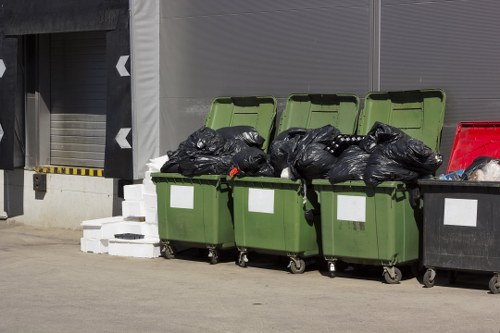 Donating usable goods and diverting items to local charities is a core part of our sustainable commercial waste strategy. We work with established organisations — including local community groups, city-wide charities such as the British Heart Foundation and Salvation Army, and food redistribution networks like City Harvest — to channel furniture, textiles, kitchen equipment and surplus food to people in need rather than to landfill.
Our partnerships are managed through scheduled collections and drop-offs at charity outlets and social enterprises. In addition to direct donations, we support social reuse projects that repair and refurbish items for resale, creating jobs and keeping materials in circulation longer.
Businesses can nominate items for donation during bookings, and our teams will provide receipts and documentation for audit and sustainability reporting purposes. This adds value to the reuse chain while helping businesses meet internal corporate responsibility targets.
Low-Carbon Fleet and Route Efficiency
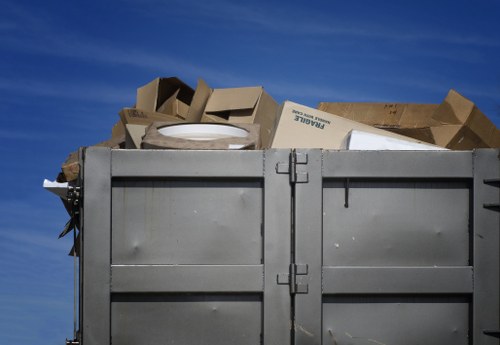 Our fleet includes low-carbon vans—electric and hybrid light commercial vehicles—supported by route-optimisation software to cut fuel use and emissions. Where electric options are not feasible for specific routes or loads, we use modern Euro-6 engines and low-emission fuels to reduce pollutants. These measures lower the operational carbon footprint of commercial waste collections across Dalston.
We also offer consolidation services that reduce the number of vehicle movements in high-traffic urban areas. By combining collections from multiple businesses into scheduled pickups, we minimise congestion and improve air quality in local streets, supporting the borough's environmental aims.
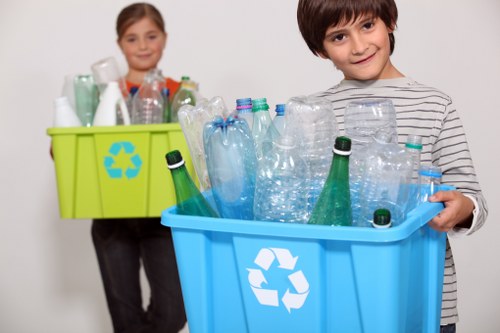 In addition to vehicles, our sustainability work includes driver training for eco-driving, use of telematics for improved fuel management, and investment in electric vehicle charging where possible. This holistic approach to transport is a critical part of running an effective and low-impact commercial waste operation.
Services That Make a Sustainable Rubbish Area Real
We offer tailored services to help businesses meet and exceed recycling targets. Key elements include:
- On-site segregation support and container provision for mixed recycling, glass, paper/card, food, and general waste
- Scheduled collections linked to local transfer stations and reuse hubs
- Documentation for recycling rates and material destinations to support reporting
Our approach to the eco-friendly waste disposal area is pragmatic: we blend municipal separation standards with commercial operational needs so that compliance becomes part of regular business workflow rather than an extra burden.
Commercial Waste Dalston is designed to be more than a removal service: it is a partner in sustainability. By combining ambitious recycling percentage targets, efficient use of local transfer stations, charity partnerships for reuse, and a low-carbon fleet, we create a resilient, community-focused model for managing business waste in Dalston.
Getting Started with Sustainable Commercial Waste
Engaging with sustainable rubbish area practices begins with a simple assessment of current waste streams. We provide clear advice on how to segregate materials, reduce contamination, and prioritise reuse. Businesses that adopt these practices see improved recycling outcomes, lower waste costs, and a stronger community contribution.
Our commitment is to continuous improvement and measurable results, aligning local commercial waste management with the borough's environmental strategies while keeping operations straightforward and effective for businesses across Dalston.
Adopting these measures builds a more resilient local economy, reduces environmental impact, and supports the circular use of resources—helping Dalston become a model eco-friendly and sustainable rubbish area for other commercial districts to follow.
